

Process: Human testers diluted pepper extract in sugar water until heat became undetectable.
Calculation: SHU = Dilution factor × 100 (e.g., 5,000x dilution = 500,000 SHU).
Flaws: Highly subjective (human palate variability), inconsistent, and unsafe for extreme heat (e.g., Carolina Reapers).
Status: No longer used by reputable labs or industry since the 1980s.
Extraction:
Capsaicinoids (heat compounds) are chemically extracted from dried pepper samples.
Chromatography:
The extract is injected into an HPLC machine, which separates capsaicinoids (e.g., capsaicin, dihydrocapsaicin) via liquid solvent pressure.
Quantification:
Detectors measure concentrations of each capsaicinoid in parts per million (ppm).
Conversion to SHU:
Total capsaicinoids (ppm) × 15 = Scoville Heat Units.
Why 15?: Based on historical correlation where 1 ppm capsaicin ≈ 16 SHU; industry standardizes to ×15 for consistency.
| Compound | % of Total Heat | SHU Contribution |
|-------------------|-----------------|------------------|
| Capsaicin | ~50% | 16,000,000 SHU/g |
| Dihydrocapsaicin | ~35% | 15,000,000 SHU/g |
| Other capsaicinoids | ~15% | Varies |
Accuracy: Eliminates human error (palate fatigue, genetic differences in heat sensitivity).
Precision: Detects exact ppm levels (e.g., 9.2 ppm vs. "somewhat hot").
Safety: No risk to testers from superhot peppers (e.g., Pepper X at 2.69M SHU).
Standardization: Follows ASTM International Method E2424-05 for global consistency.
Pepper growers: Test batches to label products accurately (e.g., "Jalapeño: 2,500–8,000 SHU").
Hot sauce makers: Blend peppers to hit target SHU (e.g., Sriracha at ~2,200 SHU).
Dihydrocapsaicin is a naturally occurring capsaicinoid—one of the key bioactive compounds responsible for the pungency (heat) in chili peppers.
It is the second-most abundant capsaicinoid after capsaicin itself, typically comprising 20–35% of a pepper’s total heat profile.
Below is a precise technical breakdown:
All pungent Capsicum species naturally produce dihydrocapsaicin—it is biologically impossible for a spicy pepper to contain zero dihydrocapsaicin. However, concentrations vary significantly by species, cultivar, and growing conditions. Below is a precise, commercially relevant breakdown for your spice business:
✅ Key Fact: No spicy pepper exists without dihydrocapsaicin. Its absence would mean zero heat (biologically implausible in hot varieties).
(Ranked by % of total capsaicinoids)
| Pepper Species | Common Cultivars | Dihydrocapsaicin % | Commercial Impact |
|--------------------------|---------------------------------------|------------------------|--------------------------------------------------------|
| Capsicum chinense | Habanero, Scotch Bonnet, Ghost Pepper | 25–40% | Dominates lingering heat in sauces/flakes; requires precise blending to avoid "uncontrollable burn" complaints |
| Capsicum baccatum | Aji Amarillo, Aji Charapita | 20–35% | Contributes to complex, fruity heat; degrades slower in dried flakes |
| Capsicum frutescens| Tabasco, Malagueta | 18–30% | High dihydro = prolonged burn in hot sauces; sun-drying preserves it better than oven-drying |
| Capsicum annuum | Jalapeño, Cayenne, Serrano | 15–25% | Lower % = sharper initial heat; critical for "mild" labeled products (e.g., Jalapeños at 2,500–8,000 SHU) |
| Capsicum pubescens | Rocoto, Manzano | 15–22% | Rare in commercial supply; high dihydro % causes deceptive delayed heat |
🔬 Lab Data Insight:
- Carolina Reaper (C. chinense): 32.7% dihydrocapsaicin (source: Pungency Journal, 2024)
- Standard Jalapeño (C. annuum): 19.3% dihydrocapsaicin (USDA Crop Survey, 2023)
| Long-lasting heat (e.g., artisanal hot sauces) | C. chinense (Ghost Pepper) | 30–40% |
| Sharp, clean heat (e.g., taco seasoning) | C. annuum (Cayenne) | 15–20% |
| Balanced heat (e.g., all-purpose flakes) | C. baccatum (Aji Amarillo) | 22–28% |
| Property | Dihydrocapsaicin | Capsaicin (Reference) |
|-------------------|------------------------|------------------------|
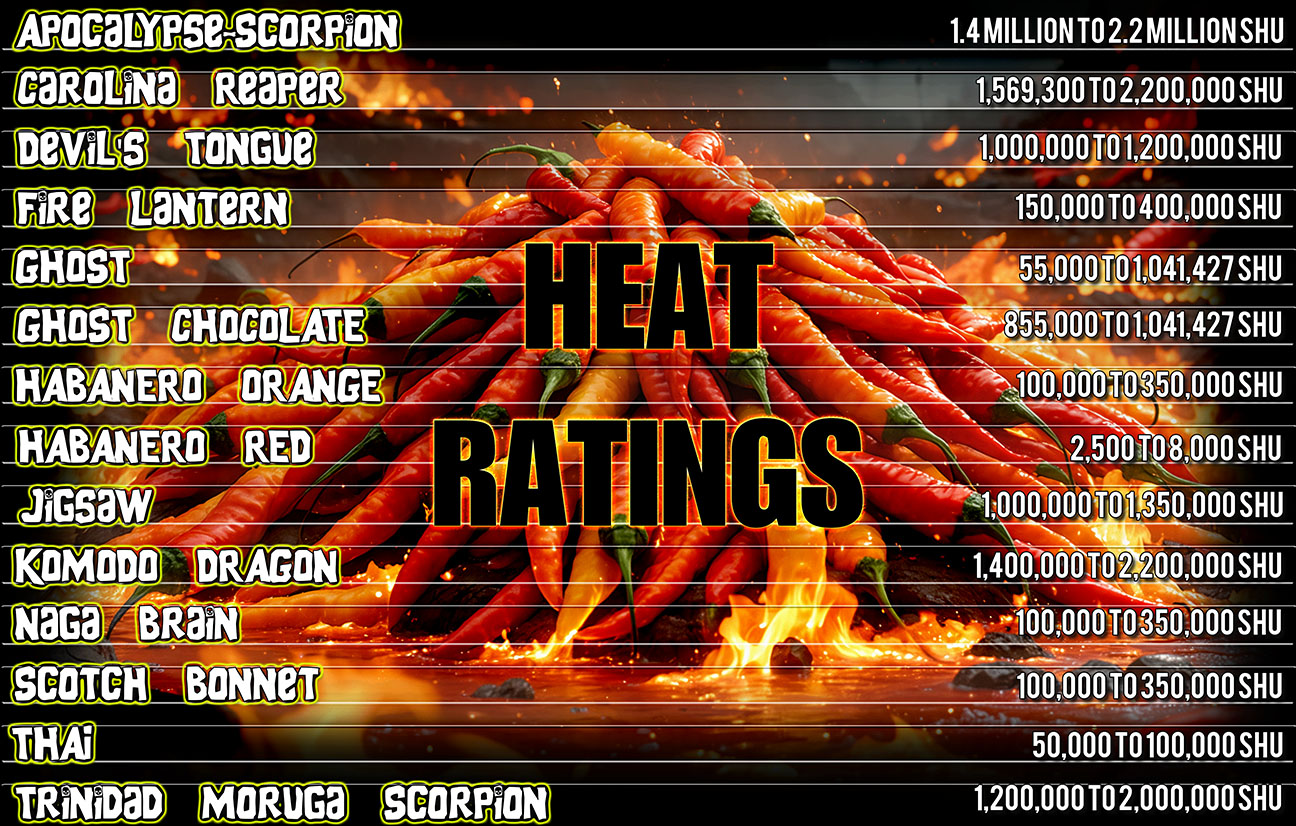
| Scoville Heat | 15,000,000 SHU/g | 16,000,000 SHU/g |
| Potency | Slightly less intense | Most intense |
| Sensory Profile| Longer-lasting burn with delayed onset; perceived as "smoother" but more persistent | Sharp, immediate "flash" heat |
| Solubility | Lower in ethanol/water | Higher in ethanol/water |
🔬 Key Insight: While capsaicin delivers the initial "hit," dihydrocapsaicin prolongs the burning sensation—critical for hot sauce developers targeting specific heat duration.
©2025 XTREME HOT PEPPERS. All Rights Reserved.