


To grow spicy hot pepper plants indoors using LED lighting, you need to optimize light intensity, spectrum, duration, and placement to mimic natural sunlight and support the plant’s growth cycle. Here’s a step-by-step guide to achieve successful indoor cultivation:
1. Choose the Right LED Grow Light
Full-spectrum LED: Use a full-spectrum LED grow light (e.g., 5000K–6500K color temperature) that emits blue (450–460 nm) for vegetative growth and red (660–680 nm) for flowering.
Specialized Lights: For vegetative growth, use a blue-rich LED (e.g., 5000K). For flowering/fruiting, shift to a red-rich LED (e.g., 6500K–7000K).
Intensity: Use a 1000–1500 lumens per plant for small plants (e.g., pepper seedlings) and 2000–3000 lumens per plant for larger plants.
2. Light Duration
Vegetative Stage (Seedlings to 4–6 Inches Tall): Provide 14–16 hours of light per day (e.g., 14 hours on, 10 hours off).
Flowering/fruiting Stage (After 6 Inches Tall): Extend to 16 hours of light per day to support flowering and fruit development.
Avoid Overexposure: Use a light timer to ensure consistent, controlled light cycles.
3. Distance from Plants
Start at 12–18 inches: Place the light 12–18 inches above the plant to avoid leaf burn.
Adjust as Plants Grow: Move the light closer (6–12 inches) as the plant matures.
Avoid Direct Contact: Keep the light away from the soil to prevent root burn.
4. Light Spectrum for Spicy Peppers
Vegetative Growth: Focus on blue light (450–460 nm) to promote leaf and stem development.
Flowering/Fruiting: Shift to red light (660–680 nm) to enhance flowering, fruiting, and heat concentration.
Balanced Spectrum: Use a full-spectrum LED that combines blue and red wavelengths for optimal growth.

5. Environmental Conditions
Humidity: Maintain 60–70% humidity to prevent transpiration stress. Use a humidity tray or misting system.
Temperature: Keep the room temperature between 65–85°F (18–30°C). Avoid cold drafts or heat sources that could stress the plants.
Ventilation: Ensure good airflow to prevent disease (e.g., root rot, fungal infections).
6. Soil and Fertilizer
Soil: Use well-draining, nutrient-rich soil (e.g., a mix of peat moss, perlite, and compost).
Fertilizer: Apply balanced NPK fertilizer (e.g., 10-10-10) during the vegetative stage and high-potassium fertilizer (e.g., 5-5-10) during flowering.
Organic Options: Use compost, fish emulsion, or bone meal for slow-release nutrients.
7. Key Benefits of LED Lighting
Energy Efficiency: LED lights use less energy than traditional grow lights (e.g., MH or HPS).
Low Heat Output: Reduces transpiration stress and root burn.
Customizable Spectrum: Tailor light wavelengths to specific growth stages (vegetative, flowering, fruiting).
Longevity: LED lights last up to 50,000 hours, reducing the need for frequent replacements.
8. Example Setup
Light Type: Full-spectrum LED (e.g., 5000K–6500K).
Distance: 12–18 inches above plants.
Duration: 14–16 hours per day.
Fertilizer: 10-10-10 (vegetative), 5-5-10 (flowering).
Humidity: 60–70% (using a humidifier or tray).
9. Common Mistakes to Avoid
Overexposure: Keep the light 12–18 inches away to prevent leaf burn.
Underlighting: Ensure sufficient light (1000–1500 lumens per plant) to avoid stunted growth.
Over-fertilizing: Avoid salt buildup by using balanced, slow-release fertilizers.
By using LED lighting with the right spectrum, duration, and placement, you can successfully grow spicy hot peppers indoors. This method ensures optimal growth, heat concentration, and flavor development for high-quality, hot pepper plants.
I USE BOTH - LED AND CFL TYPES.

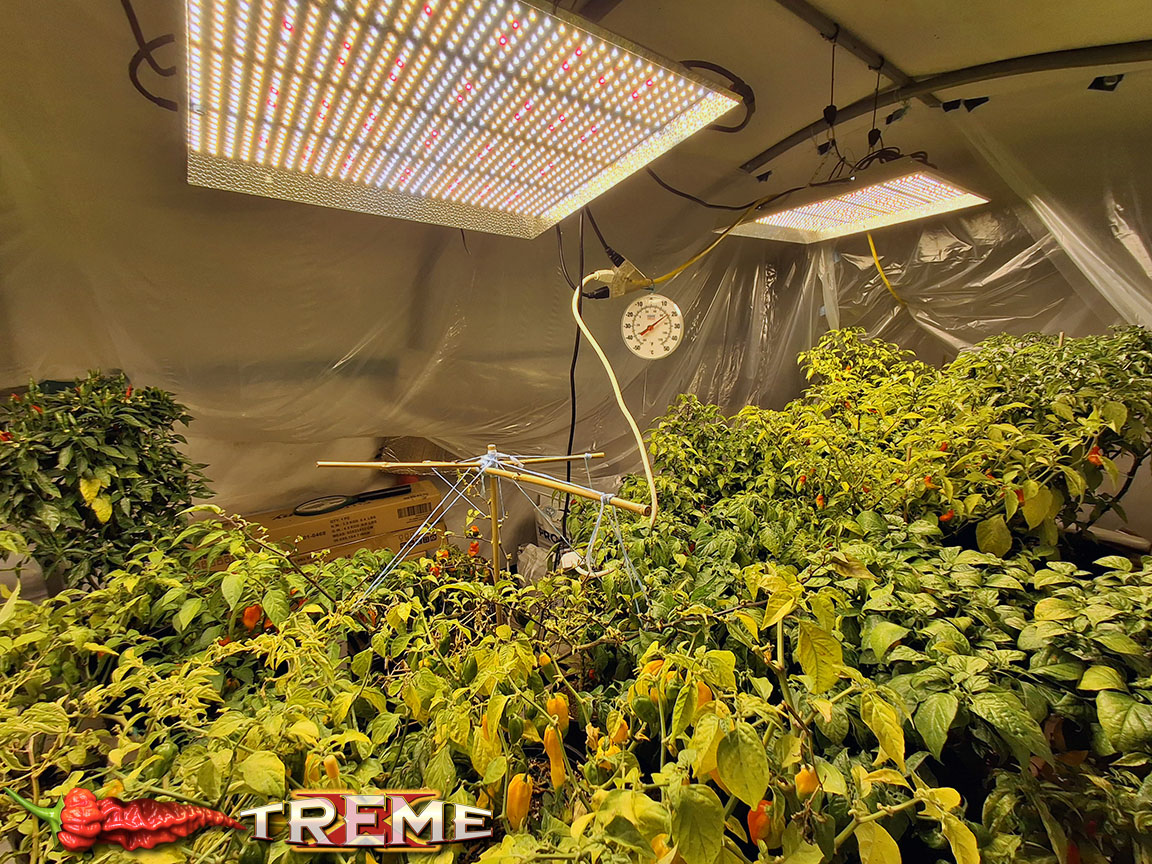

click on images for large view.

Ladybugs, being ectothermic creatures, are naturally drawn to heat sources, such as the CFL lamps and others.
To ensure their safety and maintain a suitable distance, it was imperative to double-shield the lamp with a metal screen.
This precaution is crucial as it prevents the ladybugs from coming into direct contact with the heat source, which could otherwise prove detrimental to their well-being.
The second, or "outer," screen layer was strategically added to increase the distance between the lamp and the ladybugs, particularly at the top, where the risk of dehydration is most pronounced.
This additional layer serves as a vital barrier, ensuring that the ladybugs remain in a safe and comfortable environment.
A secondary benefit of this setup is the control it provides over the movement of flying aphids.
Due to their minuscule size, these aphids are able to pass through the holes in the screen, where they subsequently dry up and perish.
This natural method of pest control helps to maintain the health and productivity of the ladybug population, as it reduces the competition for resources and minimizes the spread of potential diseases among the ladybugs.
By implementing these measures, one can effectively protect the ladybug investment, ensuring that these beneficial insects thrive and continue to play their crucial role in the ecosystem.
©2025 XTREME HOT PEPPERS. All Rights Reserved.