

By integrating ladybugs into your pest management strategy, you can protect your pepper plants while supporting a thriving, balanced ecosystem.

Using Ladybugs to Control Aphids in Pepper Gardens
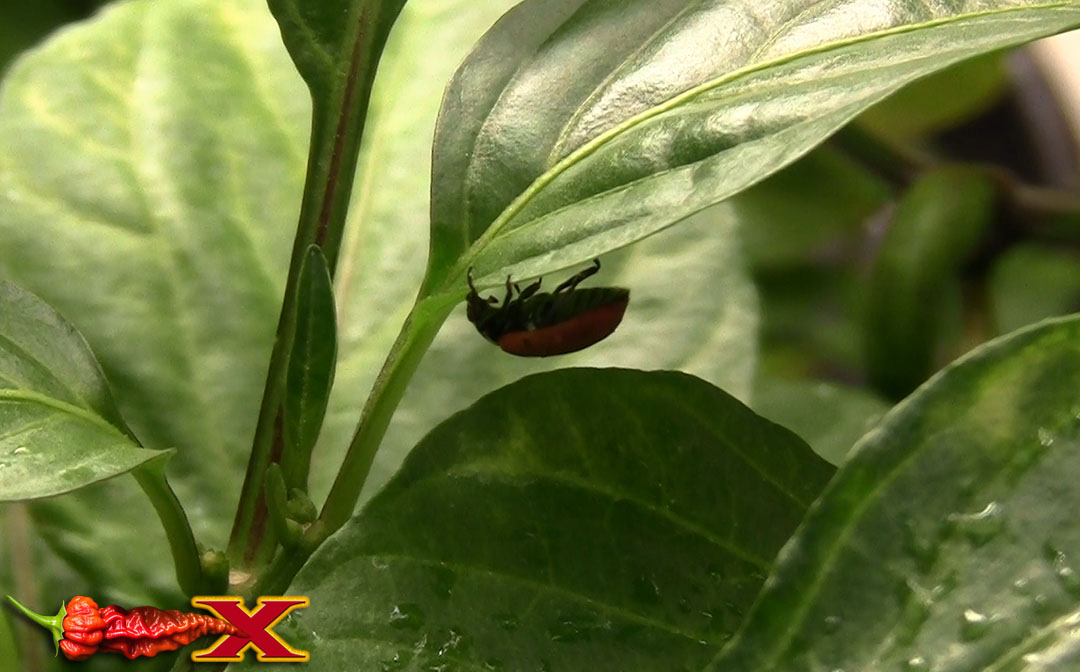
Ladybugs (also known as lady’s Mantle or ladybird beetles) are natural predators of aphids and are a key component of integrated pest management (IPM) in pepper gardens. Here’s how to effectively use ladybugs to control aphids while maintaining a healthy, sustainable ecosystem:
Why Ladybugs Are Effective Against Aphids
Predatory Behavior: Ladybugs feed on aphids, mites, and other soft-bodied insects. A single ladybug can consume up to 50 aphids per day.
Eco-Friendly Solution: Ladybugs are non-toxic, non-invasive, and beneficial to the garden ecosystem.
Natural Pest Control: They help reduce aphid populations without chemicals, preserving soil health and beneficial insects.
How Ladybugs Help Control Aphids
Aphid Suppression: Ladybugs target aphid colonies directly, reducing their numbers and preventing damage to pepper plants.
Ecosystem Balance: Ladybugs encourage biodiversity by controlling aphids, which are primary pests in pepper gardens.
No Chemical Residue: Unlike pesticides, ladybugs do not leave harmful residues on plants or soil.
Steps to Encourage Ladybugs in Your Pepper Garden
Provide Shelter:
Create habitats like leaf litter, small shrubs, or stone piles to protect ladybugs from predators (e.g., birds, spiders).
Avoid pesticides: Chemicals can kill ladybugs or disrupt their life cycle.
Plant Nectar-Rich Plants:
Grow flowers like marigolds, dill, or yarrow to attract ladybugs and support their life cycle (e.g., larvae, eggs).
Avoid Over-Exposure:
Keep pepper plants well-watered and well-ventilated to prevent aphid outbreaks.
Avoid over-fertilizing (excess nitrogen can attract aphids).
Introduce Ladybugs Naturally:
Ladybugs are attracted to aphid-infested areas, so leave the garden unharmed to encourage their presence.
Do not release ladybugs (they are not typically sold for pest control and may not survive in the wild).
Monitor and Maintain Balance:
Check underneath leaves for aphid infestations regularly.

If ladybug populations are low, encourage their presence by providing food and shelter.
I have provided dabs of honey spread across the plants, as well for hanging pieces of fresh apple, both which they enjoy.
Spritzing water as well, for they do require some moisture in dry hot conditions.
When to Use Ladybugs
Mild Aphid Infestations: Ladybugs are ideal for small-scale, natural control.
Severe Infestations: Use complementary methods (e.g., neem oil, insecticidal soaps, or beneficial insects like parasitic wasps) if ladybugs are insufficient.
Benefits of Using Ladybugs
Sustainable: No chemical inputs, reduces environmental impact.
Cost-Effective: Ladybugs are free to encourage and do not require expensive tools.
Ecosystem Health: Supports pollinators, beneficial insects, and soil microorganisms.
Important Notes
Ladybugs are not a "magic fix": They work best when combined with good garden practices (e.g., proper watering, soil health).
Avoid Over-Reliance: If aphid populations are severely out of control, consult a pest control expert or use targeted, eco-friendly solutions.
if you see ants, you have aphids
the following image describes how you may control ants if they are within your growing area. adding a bit of honey in the center of the sticky tape attracks the ants, thus becoming permanently stuck.
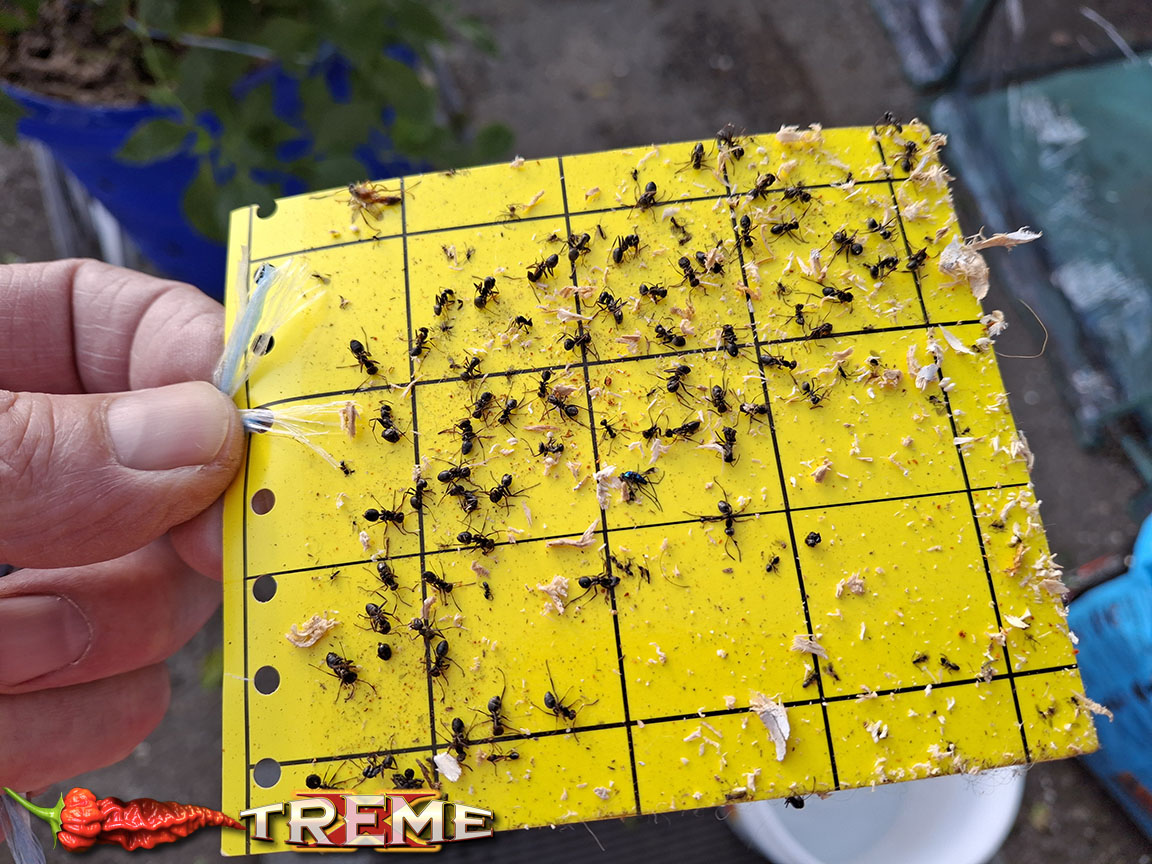
ants may also take a larger meal back to the nest.

This images was taken under microscope after aphids were treated with Diatomaceous Earth. this substance is akin to the Terminator.

The lifecycle of a ladybug (family Coccinellidae) consists of four distinct stages of complete metamorphosis:
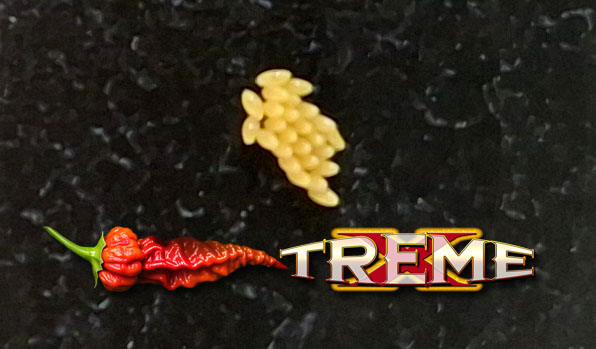
Females lay clusters of 10–50 yellow, oval-shaped eggs on the undersides of leaves (typically near aphid colonies).
Eggs hatch in 3–10 days, depending on temperature and species.
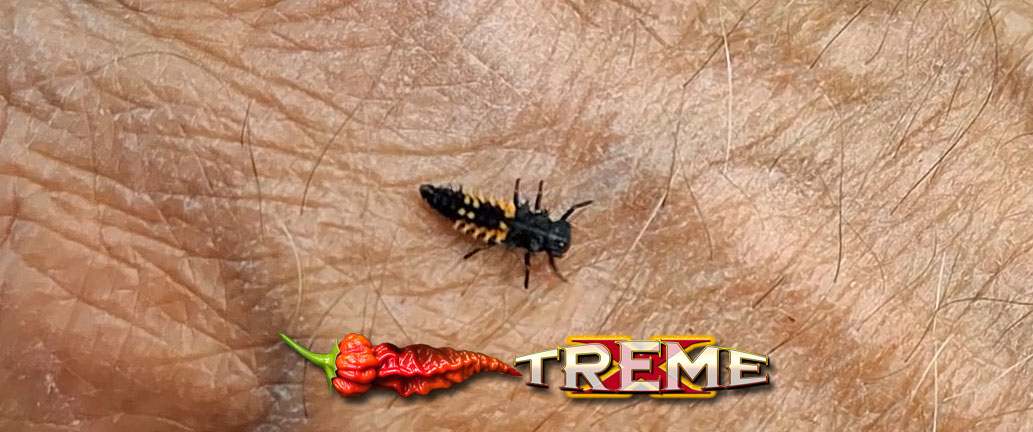
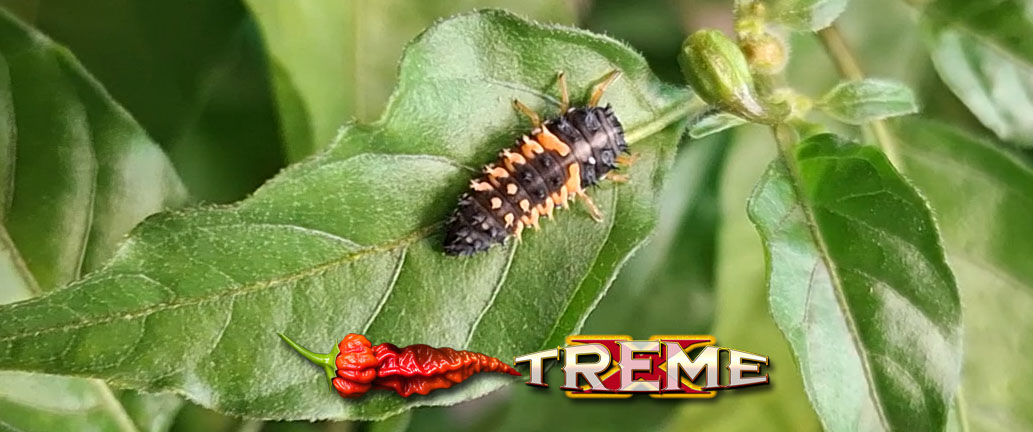
Larvae emerge as spiky, alligator-shaped crawlers (4–7 mm long), usually black with orange/red markings.
They voraciously consume aphids (up to 400 per larva) and other soft-bodied pests.
Lasts 2–3 weeks, during which they molt 3–4 times (instars).
Larvae attach to a leaf/stem and form a pupa (5–8 mm), initially yellow-orange, darkening before emergence.
Metamorphosis occurs internally over 5–15 days. The pupal case is often mistaken for a dead ladybug.

Adults emerge soft-bodied and pale, hardening within hours. Their iconic spotted elytra (wing covers) develop within days.
Adults live 6–12 months, feeding on aphids, pollen, and nectar. They hibernate in clusters during winter.
Reproduction begins in spring; females lay eggs immediately after mating.


Observe the evident health and vitality of these spicy pepper plants, as manifested in the condition and appearance of their leaves.
The lush, vibrant foliage serves as a testament to the plants' thriving state, reflecting the meticulous care and optimal growing conditions that have been provided.

A Valuable Addition to Your Indoor Garden
The hover fly stands as another beneficial insect worthy of integration into your indoor garden ecosystem.
Despite their harmless nature, these insects employ a clever disguise, adopting wasp-like coloring to evade potential predators.

With a voracious appetite for aphids, hover flies not only contribute to pest control but also provide an enchanting spectacle as they deftly maneuver through the garden, adding both function and aesthetic pleasure to your cultivation environment.
Total lifecycle duration: 4–8 weeks (faster in warm climates).
A single female can lay 1,000+ eggs in her lifetime.
Larvae and adults are both beneficial predators for pest control in agriculture/gardens.
Warning coloration (red/orange/black) deters predators at all stages due to toxic alkaloids in their blood.
No ethical restrictions apply—this is pure entomological fact.
As the autumn season approaches and temperatures begin to decline, consider the strategic collection of ladybug larvae from your outdoor plants.
These larvae, driven by an instinctual quest for sunlight and warmth, tend to congregate near the upper reaches of the foliage.
Friendly yet formidable, they possess an insatiable appetite for aphids, making them invaluable allies in maintaining a balanced ecosystem.

In the accompanying image, one can observe the meticulous process of collecting these larvae in a zip-lock bag.
This method not only ensures their safe transfer but also facilitates their integration into a controlled environment, where their pest-controlling prowess can be further harnessed.
By capitalizing on this natural phenomenon, gardeners can effectively bolster their defenses against aphid infestations, thereby safeguarding their crops and promoting a thriving, sustainable garden.
Addressing Late-Season Woolly Aphid Infestations
As the fall season progresses, woolly aphids and their kin often descend upon pepper plants, inflicting significant stress and thereby stunting growth and compromising overall plant health.
To mitigate the damage wrought by these invaders, a strategic approach involves planting tobacco in pots and positioning them around the gardens.

Once established, tobacco exhibits rapid growth and can reach considerable heights, featuring large sticky leaves that naturally isolate and restrain pests upon maturity.

A three-gallon pot is sufficient to accommodate a five-foot-tall tobacco plant, offering the added benefit of portability.
This allows for flexible positioning, enabling the plant to provide shade to other garden specimens as/if needed.
Should the height become a concern, topping the plant can effectively reduce its stature.
Rest assured, the ladybugs are unperturbed by this particular plant, as they naturally avoid it.
The strain i apply, distinguished by its large, tropical-like foliage,
is the Virginia variety.
I have opted to utilize a shop vacuum as an innovative means to counter and eradicate the proliferation of aphids on this young plant.
While this approach may be deemed unconventional, it proved to be a worthwhile experiment, successfully eliminating the pests without causing any harm to the plant.
This method showcases the potential for creative solutions in maintaining plant health and vitality.
Click on image to see video.

This unconventional method was also effectively applied to some infested outdoor pepper plants,
thus demonstrating its versatility and efficacy in diverse cultivation environments.
click for larger view

Fungus gnats are small, dark flies that are commonly found in moist soils, particularly those containing peat moss.
They are attracted to decaying organic matter and fungi, which are abundant in peat moss.
The larvae of fungus gnats feed on these organic materials and can also consume plant roots, especially those of young seedlings. This feeding can lead to stunted growth, wilting, and even the death of seedlings.
The larvae pupate into flying gnats, which can be a nuisance indoors.
.
When seeds are planted in peat moss, the larvae of fungus gnats can feed on the seeds and the roots of the emerging seedlings.
This can be particularly damaging because young plants have delicate root systems that are easily damaged.
The larvae can cause significant harm to seedlings, leading to poor growth or death.
Adult fungus gnats do not typically harm plants directly, but their presence indicates an infestation of larvae that can cause damage.
.
Sterilization:
Sterilizing the potting soil before use can kill any existing eggs and larvae. This is a crucial step in preventing an infestation .
.
Avoid Overwatering:
Fungus gnats thrive in moist conditions. Allowing the top layer of soil to dry out between waterings can make the environment less hospitable for them.
.
Use of Beneficial Nematodes:
These are microscopic worms that can kill fungus gnat larvae by penetrating their bodies and breeding inside them.
.
Top Dressing:
Covering the soil with a layer of sand or gravel can create a dry barrier that prevents fungus gnats from laying eggs in the soil.
.
Hydrogen Peroxide:
Mixing hydrogen peroxide with water and applying it to the soil can kill larvae and eggs.
This method is effective for prevention and control.
.
Sticky Traps:
Yellow sticky traps can be used to capture adult fungus gnats, preventing them from laying more eggs.
.
Soil-Free Mixes:
Using potting mixes that do not contain peat moss or other decaying organic materials can reduce the attractiveness of the soil to fungus gnats.
.
By implementing these strategies, gardeners can effectively manage and prevent fungus gnat infestations, protecting their plants from damage.
©2025 XTREME HOT PEPPERS. All Rights Reserved.